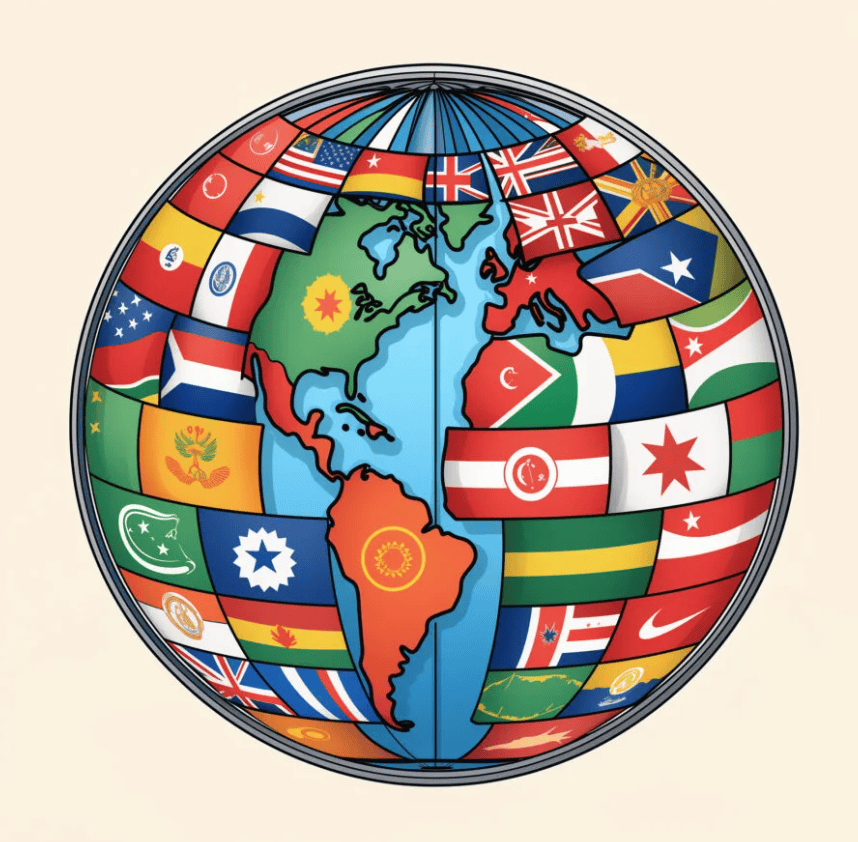
Have you ever wondered why something completely normal in one country can be totally bizarre in another? Welcome to the wonderful confusion of being human.
Imagine this: you’re invited to someone’s house for dinner. You show up right on time, bring a little gift, and compliment the food. Pretty good guest, right?
Well… that depends on where you are.
In some cultures, arriving exactly on time is polite. In others, showing up a little late is perfectly normal. In Japan, tipping can create an awkward situation, while in North America, not tipping might earn you a few dirty looks.
And don’t even get me started on greeting people.
Do you shake hands? Hug? Kiss once? Twice? Three times? At what point does saying hello become a full workout?
The funny thing is, none of these customs are necessarily right or wrong. They’re just different.
And that’s exactly what makes the world so fascinating.
Wait… There’s No Word for That?
One of my favourite things about languages is that sometimes they manage to describe feelings we all experience but never thought to name.
Take the Portuguese word saudade, for example. It describes a deep sense of longing for someone or something you miss. It’s not quite sadness, not quite nostalgia, and not quite love. It’s somewhere in between.
Or the Japanese word komorebi, which describes sunlight filtering through the leaves of trees.
Seriously. An entire word for something that beautiful.
Meanwhile, English has the word “hangry,” which is what happens when you’re so hungry you start getting angry.
Clearly, every language has its priorities.
But that’s the interesting part. Languages aren’t simply different ways of saying the same thing. They give us little clues about what people notice, value, and experience.
Sometimes, understanding another language means discovering a whole new way of looking at something you’ve seen a thousand times.
The World Is Basically One Big Group Chat
Think about how differently people communicate, even when they’re speaking the same language.
Some people get straight to the point. Others spend five minutes asking about your family, your weekend, and your neighbour’s dog before telling you what they actually need.
Some cultures value directness. Others prefer a softer approach because maintaining harmony is more important than getting an immediate answer.
Now imagine trying to advertise the exact same product to all these people.
A commercial that makes Canadians laugh might completely confuse an audience in Japan. A slogan that sounds brilliant in English might lose its meaning when translated into French.
That’s where things get really interesting.
Because communication isn’t just about finding the right words. It’s about understanding the people hearing them.
And whether you’re travelling, learning a language, making a new friend, or building a global brand, that understanding can change everything.
Why I’m Starting Beyond Translation
I’ve always been fascinated by the way people connect.
Through learning languages, teaching, and exploring different cultures, I’ve realized that some of the most interesting discoveries happen when we encounter something unfamiliar.
Sometimes it’s a new expression. Sometimes it’s a tradition that seems strange at first. And sometimes it’s realizing that the way you’ve always done something isn’t the only way to do it.
That’s the idea behind Beyond Translation.
I don’t want this to be a place where we simply memorize vocabulary or collect random facts about countries.
I want to explore the stories behind the words.
Why do people celebrate the things they celebrate? Why do certain expressions make absolutely no sense when translated? How does culture influence everything from everyday conversations to the world’s biggest brands?
And why is it that, no matter where you travel, every country seems convinced it has the best food?
(That last one might be impossible to settle, but I’m willing to investigate.)
A Little More Curiosity, A Lot Less Assuming
Here’s something I’ve been thinking about: we often assume that what feels normal to us must be normal everywhere.
Until we travel.
Or learn another language.
Or meet someone who grew up halfway across the world and discover that they’ve been doing something completely differently their entire life.
Those moments can be awkward, hilarious, confusing, and sometimes a little embarrassing.
But they’re also the moments we learn the most.
And that’s what I hope to share here: interesting discoveries, cultural surprises, language quirks, travel inspiration, and the occasional story that makes you think, Wait, people actually do that?
Because the world is way too interesting to experience from just one perspective.
So, welcome to Beyond Translation.
Let’s explore what happens when we stop translating words and start understanding people.
Explore. Learn. Belong.
One question before you go: What’s something completely normal in your culture that might seem strange to someone from another country? I’d love to hear it.
Additional Links:
https://www.japan.travel/en/responsible-travel-guide/japanese-customs-and-etiquette
https://www.dictionary.com/browse/saudade


Leave a Reply